
Introduction
The borehole drilling process in Kenya is a systematic approach to accessing reliable groundwater for domestic, agricultural, commercial, and industrial use. As water demand continues to grow and seasonal water shortages become more common, many property owners are investing in boreholes as a long-term solution for a dependable and sustainable water supply. A professionally drilled borehole can provide clean water throughout the year, reducing reliance on municipal supplies and other unreliable sources.
Understanding each stage of the drilling process is essential before starting a borehole project. Proper planning helps you make informed decisions, comply with regulatory requirements, and avoid costly mistakes that could affect the performance and lifespan of your borehole. Working with experienced drilling professionals also improves the likelihood of reaching a productive aquifer and constructing a safe, efficient water system.
The borehole drilling process involves several important stages, including project planning, a hydrogeological survey, obtaining the necessary approvals, drilling, well development, Test pumping, water quality testing, and pump installation. Each step contributes to the success of the project and ensures the completed borehole delivers a reliable source of water for many years.
What is the Borehole Drilling Process?
The borehole drilling process is a carefully planned series of activities that create a safe, reliable, and long-lasting groundwater source. It involves much more than drilling into the ground to find water. Every stage is designed to identify the best drilling location, construct a stable borehole, protect groundwater from contamination, and ensure the completed system can supply water efficiently for many years. In Kenya, the process is carried out by licensed drilling contractors using specialized equipment and industry-approved practices to maximize the chances of a successful project.
Unlike simply drilling a hole in the ground, a professional borehole requires scientific investigation and engineering expertise. Before drilling begins, a hydrogeological survey is conducted to assess the area’s geology and determine the most suitable drilling point. During drilling, geological formations are recorded to identify productive aquifers, after which the borehole is fitted with casings, screens, and gravel packs to prevent collapse and improve water quality. The borehole is then developed, tested, and equipped with a suitable pump to deliver water reliably.
The primary objective of the borehole drilling process is to reach a productive aquifer that can provide a sustainable water supply throughout the year. Equally important is constructing a durable borehole that remains structurally sound, minimizes contamination risks, and delivers clean water for domestic, agricultural, commercial, institutional, or industrial use. Proper construction also reduces maintenance requirements and extends the operational life of the borehole.
Why Proper Planning is Important Before Drilling a Borehole
Proper planning is one of the most important stages of the borehole drilling process in Kenya. A well-planned project reduces uncertainty, minimizes costly mistakes, and increases the likelihood of drilling a productive borehole. Before any drilling equipment arrives on site, property owners and drilling contractors should evaluate groundwater potential, select the most suitable drilling location, establish a realistic budget, and ensure all regulatory requirements are met. Taking these steps early helps streamline the project and improves the long-term performance of the borehole.
Understanding Groundwater Availability
Groundwater is not distributed evenly beneath the surface, making it essential to determine whether sufficient water exists before drilling begins. A hydrogeological survey evaluates the local geology, identifies potential aquifers, estimates the depth to groundwater, and predicts the expected borehole yield. This assessment helps reduce the risk of drilling a dry or low-yield borehole and provides valuable information for planning the drilling process.
Choosing the Right Borehole Location
Selecting the right drilling location is critical to the success of the project. The recommended site should provide the best chance of accessing a productive aquifer while protecting the borehole from contamination. Boreholes should be located away from potential pollution sources such as septic tanks, pit latrines, waste disposal sites, and chemical storage areas. Also, Site accessibility is important, as drilling rigs and support equipment require sufficient space to operate safely and efficiently.
Budgeting for the Entire Project
A successful borehole project involves more than the cost of drilling alone. Property owners should budget for every stage of the project, including the hydrogeological survey, regulatory approvals, drilling, casing installation, gravel packing, borehole development, pumping tests, water quality analysis, pump installation, and any associated electrical or solar power systems. Planning the full budget from the outset helps avoid unexpected expenses and ensures the project can be completed without unnecessary delays.
Meeting Regulatory Requirements in Kenya
Borehole drilling in Kenya is regulated to promote sustainable groundwater development and protect water resources. Before drilling begins, the required permits and approvals should be obtained from the relevant authorities. Working with licensed borehole drilling contractors helps ensure compliance with applicable regulations, technical standards, and reporting requirements. Meeting these legal obligations not only supports responsible groundwater management but also provides confidence that the borehole has been developed according to industry best practices.
Steps of Borehole Drilling Process in Kenya
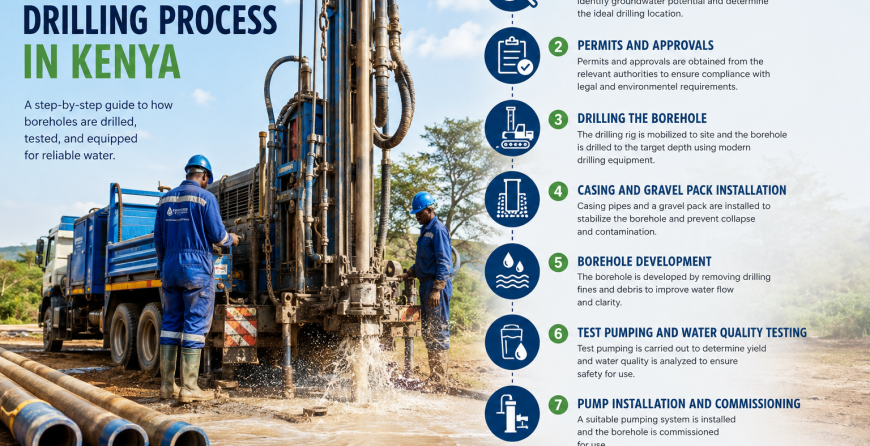
A successful borehole project follows a clear process that helps you access groundwater safely, efficiently, and sustainably. Each stage builds on the one before it, from choosing a suitable drilling location to installing the pumping system that delivers water for its intended use. Below is a detailed explanation of the key steps involved in the borehole drilling process in Kenya.
Step 1: Conduct a Hydrogeological Survey
A hydrogeological survey forms the foundation of every successful borehole project. It takes place before drilling to confirm whether enough groundwater exists beneath the site and to identify the best drilling location. The survey lowers the risk of drilling a dry or low-yield borehole and provides essential information for project planning.
During the survey, a hydrogeologist assesses the area by studying rock formations, geological structures, and groundwater conditions. This investigation helps identify potential aquifers that can supply water throughout the year. Based on the findings, the hydrogeologist recommends the most suitable drilling point, estimates the expected drilling depth, and predicts the likely borehole yield. These recommendations help property owners make informed investment decisions before drilling begins.

An image showing hydrological survey in progress
Step 2: Obtain the Necessary Permits
Before the drilling equipment moves to the site, there are permits and approvals from the relevant regulatory authorities in Kenya that should be obtained . These approvals ensure that groundwater resources are developed responsibly and in line with national water regulations. Some of the common permits needed for borehole drilling include:
- Water Resource Authority permit for water extraction
- NEMA permit for Environmental Conservation and Regulation
- County council permit
Obtaining these necessary permits helps protect groundwater resources, supports sustainable abstraction, and ensures the borehole meets legal and environmental requirements. Working with licensed borehole drilling professionals makes this process easier, as experienced contractors understand the applicable regulations and can guide clients through the approval process while maintaining compliance with industry standards.
Step 3: Mobilize Drilling Equipment and Drill the Borehole
Once the permits are in place, the drilling contractor mobilizes equipment, personnel, and support vehicles to the project site. The site should be accessible to allow safe access for heavy machinery and to create a secure working environment.
The drilling equipment usually includes a drilling rig, an air compressor, support trucks, a water tanker, drill rods, drill bits, and other specialized tools needed for the project. Each piece of equipment plays an important role in helping the team drill efficiently through different geological formations.
The drilling process usually starts with pilot drilling to establish the borehole alignment and confirm subsurface conditions. As drilling continues, the rig passes through layers of soil, weathered rock, and hard rock formations until it reaches a productive aquifer. Throughout the operation, the team records geological data such as soil samples, rock types, water strikes, and drilling depth. These records help determine the correct casing depth, screen placement, and overall borehole design.

A borehole drilling rig positioned on-site, ready for upcoming drilling operations.
Step 4: Install Borehole Casings, Gravel Pack, and Develop the Borehole
After the target depth is reached, the borehole is equipped for long-term use by installing protective components that improve structural stability and water quality.
Borehole Casing Installation
Borehole casings provide structural support and prevent the borehole walls from collapsing. Moreover, they protect groundwater from contamination by isolating unstable formations and blocking surface pollutants from entering the borehole. Depending on the geological conditions and project requirements, contractors may install either PVC or steel casings. PVC casings are common because they resist corrosion, while steel casings provide extra strength in difficult ground conditions.
Gravel Pack and Borehole Screen Installation
Once the casing is in place, the contractor positions a borehole screen across the water-bearing zones. This screen allows groundwater to enter while keeping out sand and other fine particles. Gravel pack is carefully placed around the screen to improve natural filtration, stabilize the surrounding formation, and improve water flow into the borehole. Proper installation of the gravel pack and screen greatly improves the long-term performance and lifespan of the borehole.
Borehole Development
Borehole development entails the removal of drilling fluids, fine sediments, and other debris that may have built up during drilling. Common development methods include airlifting, flushing, and continuous pumping to clean the borehole and improve water flow. Borehole development improves water clarity, increases borehole efficiency, and enhances the sustainable yield before testing begins.
Step 5: Conduct Test Pumping
Test pumping evaluates the performance of the completed borehole and determines whether it can provide a sustainable water supply. During this stage, the team pumps water continuously at a controlled rate for a specified period while monitoring changes in the water level. The common period of testing pumping in Kenya is 24hrs.
The pumping test includes constant discharge testing to measure borehole productivity and recovery testing to determine how quickly the groundwater level returns after pumping stops. The results establish the sustainable yield of the borehole and help engineers choose the right pump capacity for efficient long-term operation without overexploiting the aquifer.
Step 6: Water Quality Testing
Water quality testing takes place before the borehole is commissioned for use to confirm that the groundwater is safe and suitable for its intended application. Laboratory analysis provides valuable information about the physical, chemical, and bacteriological characteristics of the water.
Physical tests assess properties such as colour, odour, turbidity, and temperature. Chemical analysis measures dissolved minerals and other substances that may affect water quality, while bacteriological testing identifies harmful microorganisms that could pose health risks. Testing is essential because groundwater quality varies from one location to another, and the results show whether treatment is needed before the water is used for drinking, irrigation, commercial, or industrial purposes.
Step 7: Borehole Equipping
The final stage of the borehole drilling process in Kenya involves equipping the borehole with the components needed to extract and distribute water efficiently.
The first step is selecting a pump that matches the borehole depth, borehole yield, and intended water demand. Depending on the project requirements, the system may use a solar-powered pump or an electric submersible pump. Once the pump is selected, the contractor installs the rising main, electrical cables, control equipment, and other essential components needed for reliable operation.
The contractor then completes the borehole by constructing secure headworks, including a protective borehole cover, a concrete apron, and proper drainage around the wellhead. These features help prevent contamination from surface runoff, protect the borehole infrastructure, and ensure the water supply system operates safely and efficiently for many years.
Factors that Affect the Borehole Drilling Process in Kenya
Several factors influence the success, duration, and overall cost of the borehole drilling process in Kenya. Understanding these factors helps property owners plan effectively, anticipate potential challenges, and make informed decisions before drilling begins. From geological conditions to site accessibility, each factor influences the success of the borehole project.
Geological Formations
The type of rock and soil beneath the drilling site significantly affects the drilling process. Soft formations such as clay and weathered rock are generally easier and faster to drill through than hard crystalline rocks like granite or basalt. Different geological formations influence the choice of drilling equipment, drilling methods, and casing design. A hydrogeological survey provides valuable information about the subsurface conditions before drilling starts.
Borehole Depth
Drilling depth varies depending on the location and the depth of the target aquifer. In some areas, groundwater may be encountered at relatively shallow depths, while other locations require much deeper drilling to reach a productive water-bearing formation. Deeper boreholes typically require more drilling time, additional materials, and higher operational costs, making depth one of the key factors affecting the project.
Accessibility of the Site
Easy access to the drilling location allows equipment, support vehicles, and personnel to reach the site efficiently. Narrow roads, steep terrain, dense vegetation, or soft ground can make it difficult to mobilize heavy drilling equipment, potentially increasing project time and costs. Preparing the site before mobilization helps ensure drilling operations proceed safely and efficiently.
Weather Conditions
Weather can affect both the safety and efficiency of drilling operations. Heavy rainfall may make access roads impassable, create muddy working conditions, and delay equipment movement. Dry weather generally provides better working conditions and allows drilling activities to proceed with fewer interruptions. Scheduling the project during favorable weather conditions can help minimize delays.
Equipment Availability
The availability and condition of drilling equipment influence the success of the project. Modern, well-maintained drilling rigs, compressors, and support equipment improve drilling efficiency and reduce the risk of mechanical breakdowns. Experienced drilling contractors invest in reliable equipment to complete projects safely and within the expected timeframe.
Groundwater Conditions
Groundwater conditions vary from one location to another and directly affect borehole performance. Several groundwater conditions affect borehole yield. These include aquifer size, groundwater recharge, water-bearing fractures, and seasonal water level changes. Areas with productive aquifers are more likely to provide a reliable water supply. Locations with limited groundwater may require deeper drilling or produce lower yields. A professional hydrogeological survey helps assess these conditions before drilling begins.
How Long Does the Borehole Drilling Process Take?
The timeline to complete the borehole drilling process in Kenya depends on factors such as the project’s complexity, geological conditions, weather, site accessibility, and regulatory approvals. Although every project is different, most borehole developments follow a similar timeline from the initial survey to pump installation. Working with a professional drilling company helps keep the project on schedule while ensuring each stage is completed to the required standards.
Hydrogeological Survey
A hydrogeological survey is usually completed within one day, although preparing the final report and recommendations may take a few additional days. During this stage, the hydrogeologist evaluates groundwater potential, recommends the drilling location, estimates the drilling depth, and predicts the borehole yield estimation.
Permitting and Regulatory Approvals
The timelines to obtain permits vary depending on the relevant authorities and the completeness of the application. In many cases, approvals can take several days to a few weeks. Starting the permitting process early helps avoid unnecessary delays once the project is ready to begin.
Borehole Drilling
The actual drilling process generally takes one to three days, depending on the target depth, geological formations, and drilling conditions. Hard rock formations or deeper boreholes may require additional drilling time, while favorable ground conditions often allow the work to be completed more quickly.
Borehole Development
After drilling is complete, the borehole development is conducted by removing drilling fluids, fine sediments, and debris through airlifting, flushing, or continuous pumping. This stage usually takes several hours to one day, depending on the borehole depth and the amount of debris removed.
Test Pumping and Water Quality Testing
Test pumping is normally carried out for 24hours to measure the borehole’s sustainable yield and recovery rate. Water samples collected during this stage are sent to a laboratory for physical, chemical, and bacteriological analysis. Laboratory testing may require several additional 2-3 days, depending on the testing requirements and laboratory turnaround times.
Pump Installation
Once the borehole has successfully passed performance and water quality tests, a pumping system is installed. Pump installation, including the rising main, electrical connections, and borehole headworks, is typically completed within one day for most projects.
Overall, a straightforward borehole project can be complete within two to four weeks, including surveys, regulatory approvals, drilling, testing, and pump installation. Projects involving deeper drilling, challenging geological conditions, or extended approval processes may take longer to complete.
Common Challenges During Borehole Drilling
Although modern drilling equipment and experienced professionals have significantly improved the success rate of borehole projects, several challenges can arise during the borehole drilling process in Kenya. Geological conditions, environmental factors, and operational issues may affect project timelines, costs, and borehole performance. Understanding these challenges helps property owners appreciate the importance of proper planning and working with qualified drilling contractors.
Hard Rock Formations
Some regions of Kenya have hard crystalline rock formations such as granite and basalt that are more difficult to drill through than softer soils or weathered rock. Drilling through these formations requires specialized drill bits, powerful drilling rigs, and more time to reach the target depth. Professional contractors select the appropriate drilling methods and equipment to improve efficiency and minimize delays.
Low Groundwater Yield
Reaching groundwater does not always guarantee that the borehole will produce enough water to meet the intended demand. Some aquifers have limited water-bearing capacity, resulting in lower-than-expected yields. A hydrogeological survey helps locate productive aquifers and reduces the risk of low borehole yields.
Dry Boreholes
In some cases, drilling may reach the depth without encountering a productive aquifer. This can happen because of complex geological conditions or limited groundwater resources in the area. A detailed hydrogeological survey improves the chances of locating a productive aquifer and reduces the risk of a dry borehole.
Borehole Collapse
Unstable soil or fractured rock formations can cause sections of the borehole to collapse during or after drilling if they are not properly supported. Installing the correct borehole casings and following recommended construction practices help maintain borehole stability and protect the water source from contamination.
Equipment Breakdowns
Borehole drilling relies on heavy machinery operating under demanding conditions. Mechanical failures involving drilling rigs, compressors, pumps, or support equipment can interrupt operations and extend project timelines. Reputable drilling contractors minimize this risk through regular equipment maintenance and inspections.
Delays Caused by Weather
Moreover, weather conditions can affect drilling operations, particularly during periods of heavy rainfall. Flooded access roads, muddy working areas, and poor site conditions may delay equipment mobilization and drilling activities. Scheduling projects during favorable weather conditions and preparing the site properly can help reduce weather-related disruptions.
Despite these challenges, experienced borehole drilling contractors use proper planning, modern equipment, and proven techniques to minimize risks. Careful planning and experienced drilling contractors help maximize the success and long-term performance of a borehole.
Frequently Asked Questions About the Borehole Drilling Process in Kenya
What is the borehole drilling process in Kenya?
The borehole drilling process in Kenya follows a series of steps that help you access groundwater safely and efficiently. It starts with a hydrogeological survey, then moves to permit acquisition, borehole drilling, casing and gravel pack installation, borehole development, pumping and water quality tests, and finally pump installation.
What are the steps involved in drilling a borehole?
A typical borehole project begins with a hydrogeological survey. After that, the team secures regulatory approvals, mobilizes drilling equipment, drills the borehole, installs casings and gravel packs, develops the borehole, carries out test pumping and water quality analysis, and equips the borehole with a suitable pump.
How long does it take to drill a borehole?
The drilling work itself usually takes one to three days, depending on the borehole depth and geological conditions. The full project, including the survey, permits, testing, and pump installation, often takes two to four weeks.
How deep should a borehole be in Kenya?
Kenya does not have a standard borehole depth. The required depth depends on the local geology and the depth of the target aquifer. A hydrogeological survey helps estimate the drilling depth based on the groundwater conditions at the proposed site.
What permits are required before drilling?
Before drilling begins, you should secure the necessary approvals from the relevant regulatory authorities in Kenya. A licensed borehole drilling contractor can help you meet the legal and technical requirements for the project.
How do I know if my land has groundwater?
The most reliable way to determine groundwater availability is to carry out a professional hydrogeological survey. A qualified hydrogeologist studies the site’s geology, identifies potential aquifers, estimates the drilling depth, and predicts the expected borehole yield.
What happens after the borehole is drilled?
After drilling, the team installs casings, screens, and a gravel pack, then develops the borehole to remove drilling debris. Next, they carry out test pumping and water quality analysis to confirm the borehole’s performance and water safety. Once these steps are complete, they install the pumping system and commission the borehole for use.
Conclusion
Understanding the borehole drilling process in Kenya helps property owners make informed decisions before investing in a borehole. Every stage, from the hydrogeological survey and permit acquisition to drilling, borehole development, testing, and pump installation, contributes to the success, efficiency, and longevity of the water supply system.
Working with an experienced borehole drilling contractor ensures the project follows industry best practices and complies with Kenya’s regulatory requirements. Professional planning, quality workmanship, and proper testing also reduce risks and improve the chances of developing a productive borehole that delivers a reliable water supply for years to come.
If you are planning to drill a borehole, consult our experienced team for expert guidance and professional drilling services. We will help you through every stage of the project to deliver a safe, efficient, and long-lasting water solution tailored to your needs. Reach us at 0718 765 936 or Visit our Website https://antonlinersystems.co.ke

[…] Each stage plays an important role in determining the borehole’s performance, water quality, and lifespan. A professionally developed borehole is more likely to provide a consistent water supply while minimizing the risk of structural failure and contamination. For a detailed explanation of each stage, read our comprehensive guide on the borehole drilling process. […]